9 min read
How to Launch a Brand in India: Entry Routes for Fashion
By Zyvora Brands
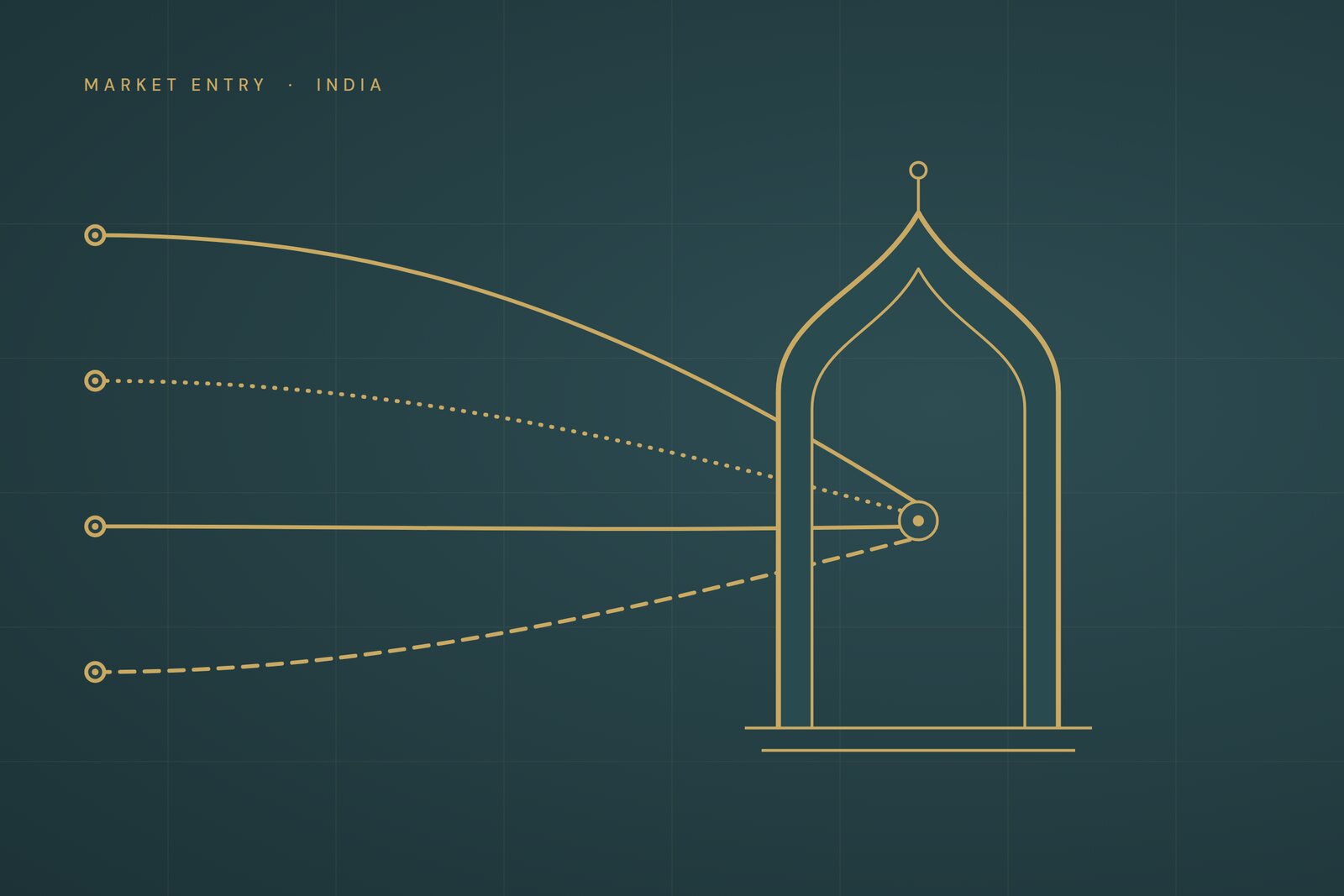
If you are weighing how to launch a brand in India, there is no single route. International fashion labels usually choose between four: a wholly owned subsidiary, a joint venture, a franchise or distribution partnership, or a marketplace and direct-to-consumer (D2C) store. The right one depends on how much capital, control and local expertise the brand wants to bring itself.
This guide sets out each route, the regulatory basics to research, and the questions to ask before committing to a partner. It is general information, not legal or tax advice, and the rules change. Please confirm current requirements with qualified advisers in India.
Why brands are looking at India
India's apparel market is large and fragmented. CareEdge Ratings estimated apparel retail at about ₹9.30 lakh crore (US$112 billion) in FY25, with organised retail accounting for roughly 41% and expected to grow at 10 to 13% a year (IBEF, citing CareEdge). Research houses define the market differently, so treat any single figure as indicative.
Luxury is a much smaller and more concentrated pool, and its published estimates usually include cars, travel and dining as well as clothing. We look at where it trades in our guide to luxury brands in India.
The opportunity comes with a need for local knowledge. Climate, price sensitivity, festive calendars and retail formats vary widely from region to region, so India behaves less like one market than several.
How to launch a brand in India: the four main entry routes
1. Wholly owned subsidiary
India's foreign direct investment (FDI) policy allows up to 100% foreign investment in single-brand retail trading through the automatic route, following a Cabinet decision of 10 January 2018. The brand sets up an Indian entity, hires a team, opens stores or an online store, and controls everything.
This route gives full control of brand, pricing, data and customer experience, and all of the margin stays with the brand. It also carries the highest investment and the longest learning curve, and needs local leadership, real estate, supply chain, tax and compliance capability from day one. Single-brand retail conditions apply as well, as set out below.
2. Joint venture
A joint venture pairs the brand with an Indian company that contributes capital, retail networks or operating experience, with ownership shared by agreement.
Investment and risk are shared, and the brand gets faster access to real estate, staff and relationships. Governance matters more than the headline split. Settle decision rights, exit terms, brand standards and what happens if strategies diverge, in writing, at the outset. A poorly matched partner is harder to unwind than a distribution contract.
3. Franchise or distribution partner
Here an Indian company takes on the brand under contract. A franchise partner typically operates stores under the brand's name and standards; a distributor imports and sells to retailers, or runs its own channels. Many international labels begin this way, particularly when testing demand. A brand looking for a franchise partner for international brands in India, or a fashion brand distributor in India, is weighing this route.
Capital outlay is lower, and the partner usually carries local operations, importer-of-record responsibilities and day-to-day compliance, which can make this the fastest route to market. In exchange, the brand has less direct control. Pricing, presentation, stock allocation and customer data depend on the partner's discipline, so the contract and the partner's fit with the brand carry real weight. Negotiate exclusivity, territory, minimum commitments and termination terms carefully.
4. Marketplace and D2C e-store
Selling through established online marketplaces, or through the brand's own Indian-facing website, lets a brand test demand with limited fixed costs. In single-brand retail, the August 2019 amendments allow online sales to begin before a physical store opens, provided the entity opens brick-and-mortar stores within two years of starting online retail (PIB release on the Cabinet decision).
Selling online is quick to start and easy to measure, and it shows which cities and products respond. Discounting on marketplaces can erode premium positioning, though, and a website alone does not give the physical presence that high-consideration fashion often needs. Returns, delivery and customer service must also meet local expectations.
Comparing the routes
| Route | Control | Up-front investment | Speed to market |
|---|---|---|---|
| Wholly owned subsidiary | Highest | Highest | Slowest |
| Joint venture | Shared | Shared | Moderate |
| Franchise or distribution partner | Lower | Lowest | Fastest |
| Marketplace or D2C | Varies | Low to moderate | Fast |
The routes can be combined. A common progression is to start with a partner or an online presence, learn the market, and decide later whether to take more of the operation in-house.
Regulatory and practical basics to research
The topics below are a research checklist. They are not a substitute for professional advice.
FDI and single-brand retail conditions
The government describes its FDI framework as the Consolidated FDI Policy Circular of 2020, as amended from time to time. Its single-brand retail section (paragraph 5.2.15.3) includes these conditions:
- Products must be of a single brand only, sold under the same brand in one or more countries other than India, and branded during manufacturing.
- Up to 100% FDI is permitted under the automatic route. The brand owner can trade directly, or an Indian entity can do so under a legally tenable agreement with the brand owner.
- Where foreign investment exceeds 51%, at least 30% of the value of goods purchased must be sourced from India, preferably from MSMEs, village and cottage industries, artisans and craftsmen. This is measured as an average over the first five years, starting from 1 April of the year the first store opens or online retail begins (whichever is earlier), and annually after that.
- All procurement from India for the brand counts towards the 30%, whether the goods are sold in India or exported, and sourcing from India for the brand's global operations can be set off against it.
- Online retail can start before stores open, provided stores open within two years.
Separately, an investor from a country that shares a land border with India, or whose beneficial owner is situated in or a citizen of such a country, can invest only through the government approval route (Press Note 3 of 2020, reflected in the same circular).
The 2018 and 2019 changes are explained in the Cabinet releases linked above. Read the current circular and any later press notes on the DPIIT website, and take advice, before relying on this summary.
Import duties and GST
Imported apparel attracts customs duty and Integrated GST (IGST) at the border, and the rates depend on the product's tariff classification. Check your classification and rates against the official tariff published by the Central Board of Indirect Taxes and Customs rather than general rate tables.
On the domestic side, GST on apparel was restructured from 22 September 2025, following the GST Council's 56th meeting. Apparel with a sale value of up to ₹2,500 per piece attracts 5% (PIB briefing), and apparel above ₹2,500 per piece attracts 18% (EY tax alert). Because the rate follows the selling price, pricing and tax planning go together.
Labelling: Legal Metrology
Garments sold in India must carry the declarations required by the Legal Metrology (Packaged Commodities) Rules, 2011. A 2022 amendment (G.S.R. 648(E), in force since 1 January 2023) lets finished garments sold loose, where the shopper can inspect them before buying, carry a shorter set of details: the name and address of the manufacturer, marketer, brand owner or importer, with country of origin for imported products; a consumer-care email and phone number; the size, using indicators such as S, M and L with measurements in centimetres or metres; and the maximum retail price inclusive of all taxes. The same details must be shown when the product is sold online. Law-firm commentary explains the change. Garments sold in packaged form are subject to the fuller declarations in the Rules, so check the requirements for your specific product and packaging.
Trademark registration
Trademark registration is territorial. A mark registered in Europe or the United States does not give you registered rights in India, and a third party can apply first. File early, ideally before announcing plans. A brand can apply directly to the Indian Trade Marks Registry or designate India through the Madrid Protocol, which came into force for India on 8 July 2013. Search for conflicting marks in the relevant classes, including clothing, footwear and headgear.
Choosing where to launch
Most international fashion brands start in a few cities where affluent customers and premium retail are concentrated. In Delhi, DLF Emporio in Vasant Kunj has been a luxury address since 2008. In Mumbai, Reliance opened Jio World Plaza in Bandra Kurla Complex on 1 November 2023, with 66 luxury brands at launch (Reliance Industries).
Beyond real estate, think about where your customer lives and shops: who already buys your brand abroad, which cities suit your collections' climate, and where online demand is strongest. For many labels, sales data from a first digital pilot is a better guide than assumptions.
Pricing and positioning
Import duties, GST, logistics and retail margins add up, so a garment's Indian shelf price is usually higher than its price at home. Decide early whether you will price at parity with international markets, absorb part of the difference, or position the India range differently. Whichever you choose, keep it consistent: price gaps between your own website, marketplaces and stores quickly undermine a premium position.
Positioning also needs local judgement. Fit, fabric weight, colour palettes, and the festive and wedding calendars all shape what sells. A brand's heritage story travels well, provided it is retold with some local relevance instead of simply translated.
A digital-first launch
Many Indian customers now meet premium brands online first. A digital-first launch can mean an Indian-facing store with local payment methods, rupee pricing inclusive of GST, clear delivery and returns policies, and content written for local customers. It also gives the brand early data on cities, sizes and price points before it commits to physical stores. Keep the policy condition noted earlier in mind: a single-brand retail entity that starts online must open physical stores within two years.
Choosing the right partner
Whichever route you choose, a partner or adviser will shape the brand's first years in India. Their answers to the questions below, given clearly at the start, will tell you more about the relationship than any presentation.
- Do they understand how the brand wants to be presented, and what other labels do they handle?
- Have they launched international brands in India before, and can you speak to those brands?
- Which mix of stores, wholesale, marketplaces and own e-commerce do they propose, and why?
- Who sets prices, approves visual merchandising and owns customer data?
- Who acts as importer of record and handles labelling, tax filings and customs?
- What are the minimum purchase, territory, exclusivity and term provisions, and how can the agreement end?
- What sales and inventory data will you receive, and how often?
A note on Zyvora Brands
Zyvora Brands is a brand curation and distribution company based in Gurugram. It currently works with Palm Angels, which is available in India through its official store, and Dickies, which is arriving soon. You can learn more about the company and its founders on the about page, or see how international labels are positioned in India in our pieces on luxury streetwear in India and international clothing brands in India.
If you are considering India, talk to us through the contact page. We would be glad to hear about your brand and how far your plans have got.
Frequently asked questions
Can a foreign fashion brand own 100% of its Indian retail business?
In single-brand retail trading, yes: 100% foreign investment has been allowed under the automatic route since a January 2018 Cabinet decision. Where foreign investment exceeds 51%, at least 30% of the value of goods purchased must be sourced from India, and investors from countries that share a land border with India need government approval. Check the current consolidated FDI policy and any later press notes before planning.
Is a distribution or franchise partner easier than setting up a subsidiary?
It usually needs less up-front commitment, because the partner carries the local entity, compliance and operations. The trade-off is less direct control over pricing, presentation and customer data, which is why the agreement and the partner's fit with the brand matter.
What labelling rules apply to imported garments in India?
Under a 2022 amendment to the Legal Metrology (Packaged Commodities) Rules, in force since 1 January 2023, finished garments sold loose must carry the name and address of the manufacturer, marketer, brand owner or importer (with country of origin for imports), a consumer-care email and phone number, the size, and the maximum retail price inclusive of all taxes. E-commerce listings must show the same details. Check the current rules for your product and packaging.
Do I need to register my trademark in India before launching?
It is strongly advisable. Trademark registration is territorial, so a registration elsewhere does not give you registered rights in India. Brands can file directly with the Indian Trade Marks Registry or designate India through the Madrid system, which has applied to India since July 2013.